


The Secret Behind Braj’s Famous 56 Bhog & Its Food Traditions
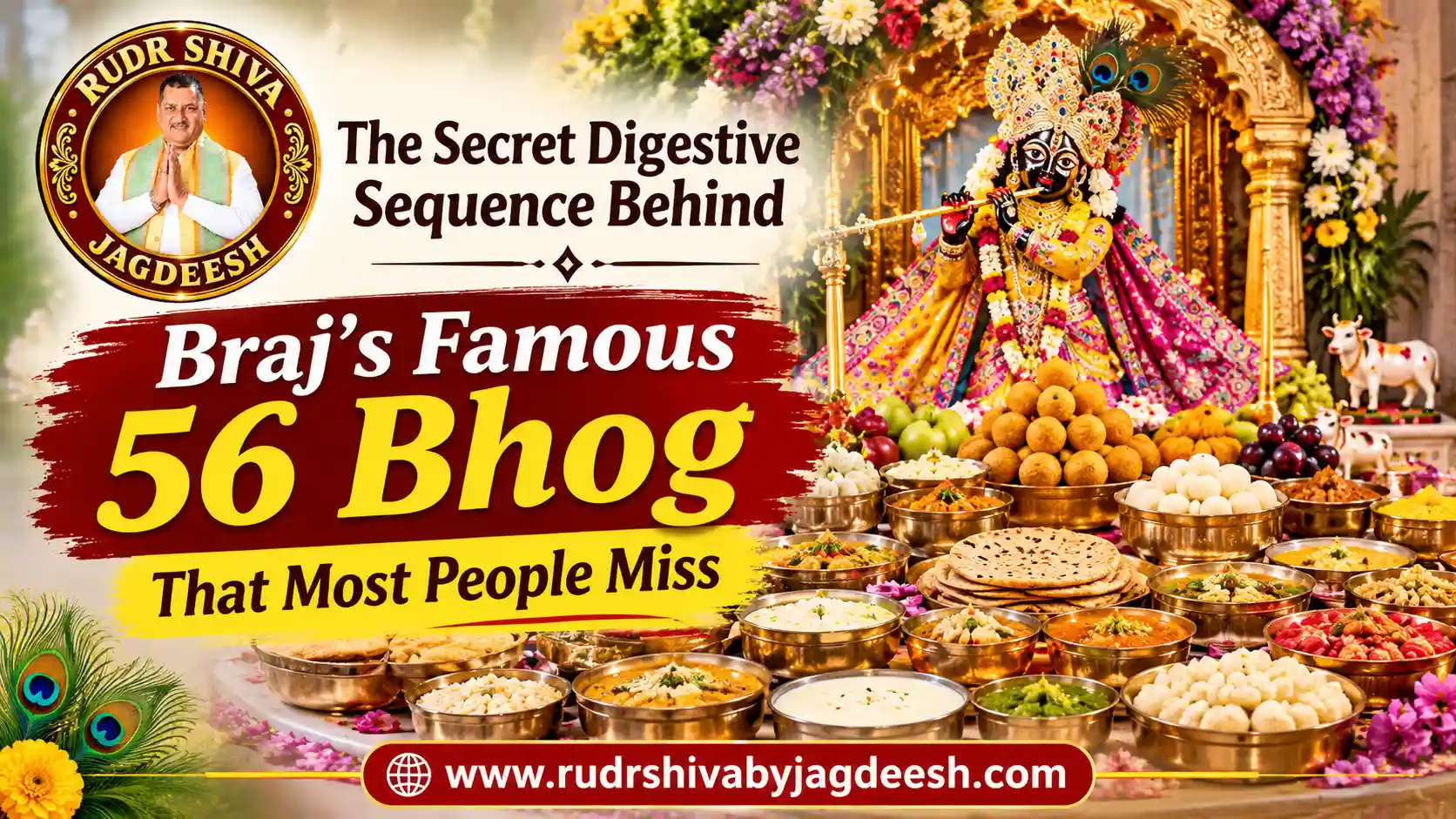
Discover the fascinating story behind Braj’s famous Chhappan Bhog. Explore why 56 dishes are offered to Lord Krishna, the six traditional tastes of Ayurveda and the food culture that makes Mathura and Vrindavan special.
A mountain of food, 56 different offerings and centuries of devotion—Braj’s famous Chhappan Bhog is much more than a grand festive spread. Behind its variety lies an interesting connection between traditional food wisdom, the six tastes of Indian cuisine and the art of enjoying a balanced meal.
Imagine standing in front of a beautifully arranged mountain of food. There are golden puris, fragrant rice, rich kheer, fresh fruits, creamy milk preparations, savoury snacks, laddoos and traditional sweets. Every dish looks tempting, and every preparation has a place in a much bigger story.
This is the magic of Braj’s Chhappan Bhog, the celebrated offering of 56 food items associated with Lord Krishna.
But here is something many visitors overlook: the experience is not simply about counting 56 dishes. It also invites us to think about the variety of flavours, textures and ingredients that make traditional Indian meals so special.
Could the secret behind this grand spread be connected to the traditional Indian understanding of food and digestion? Let’s explore the story.
Why Does Braj Offer 56 Dishes to Lord Krishna?
The story of Chhappan Bhog is closely connected with the Govardhan Leela.
According to the popular devotional tradition, Lord Krishna lifted Govardhan Hill to protect the people and cattle of Braj from heavy rain sent by Indra. He held the hill for seven days, during which he is believed to have missed his usual eight meals each day.
After the storm ended, the people of Braj expressed their gratitude by preparing 56 food offerings for Krishna.
The calculation is simple:
7 days × 8 meals = 56 offerings.
This is the most widely shared explanation behind the tradition. Chhappan means fifty-six, while Bhog refers to food offered to the deity.
Over time, Chhappan Bhog became an important part of Krishna celebrations, especially Govardhan Puja and Janmashtami. The offerings represent devotion, gratitude, abundance and the joy of sharing food.
The Interesting Connection Between 56 Bhog and Traditional Food Wisdom
A traditional Indian meal is often appreciated for more than its quantity. Its tastes, ingredients, preparation methods and balance all contribute to the dining experience.
This is where the idea of the six tastes, known in Ayurveda as Shad Rasa, becomes interesting.
The six traditional tastes are:
- Madhura (Sweet): Kheer, peda, laddoo and other sweet preparations.
- Amla (Sour): Curd-based dishes and certain chutneys.
- Lavana (Salty): Savoury snacks and seasoned preparations.
- Katu (Pungent): Spiced vegetables and selected savoury dishes.
- Tikta (Bitter): Certain leafy vegetables and bitter ingredients.
- Kashaya (Astringent): Foods with a dry or puckering taste, including some pulses and vegetables.
A traditional Chhappan Bhog spread can bring several of these tastes together through sweets, dairy preparations, cereals, vegetables, fruits, savouries and condiments.
However, not every Chhappan Bhog contains exactly the same dishes. Recipes and arrangements differ between temples, traditions and families.
The fascinating part is the variety: one offering can bring together many flavours and textures in a single devotional spread.
Is There a Traditional Order for Eating Different Tastes?
Here is the detail that makes this story especially interesting.
Some traditional Ayurvedic dietary texts describe a sequence for consuming different tastes. One account in the Sushruta tradition describes beginning with sweet taste, moving to salty and sour tastes, and finishing with pungent, bitter and astringent tastes.
This is a traditional dietary concept, not a fixed rule for every person or every meal.
It is also important to understand the difference between the order of offering food to Krishna and the order in which devotees eat prasad. Chhappan Bhog is a religious offering, and its arrangement or serving order can follow temple-specific customs. The Ayurvedic taste sequence should not be presented as a compulsory Chhappan Bhog ritual.
So, what can a modern food lover take away from this idea?
A meal can feel more thoughtfully composed when it includes a variety of flavours rather than relying on only one taste.
The Five Food Groups That Make Chhappan Bhog So Special
Although the exact menu varies, many Chhappan Bhog arrangements bring together several broad categories of food.
1. Dairy-Based Delicacies
Milk, curd, butter, makhan-mishri, rabri and kheer have a special place in Krishna-inspired food traditions.
These preparations also connect with Braj's cultural association with cows, milk and dairy products.
2. Traditional Sweets
Peda, laddoo, jalebi, malpua and other sweets add richness and sweetness to the spread.
Mathura is particularly famous for its peda, making traditional milk-based sweets an important part of the region's food identity.
3. Grains, Rice and Breads
Rice preparations, khichdi, puri and other grain-based dishes provide variety and make the offering feel like a complete feast.
4. Vegetables and Savoury Preparations
Vegetable curries, kadhi, dal, pakoras and other savoury dishes bring different flavours and textures to the arrangement.
5. Fruits, Chutneys and Accompaniments
Fresh fruits, dry fruits, pickles and chutneys add colour and contrast to the spread.
Together, these categories show why Chhappan Bhog is not simply a collection of sweets. It represents a wide variety of food preparations.
Why the Order of Eating Matters Less Than the Way We Eat
The idea of a traditional food sequence is interesting, but there is another everyday lesson worth remembering.
Eating slowly, choosing suitable portions and paying attention to hunger and fullness can make a meal more comfortable.
A few simple habits can improve your dining experience:
- Avoid rushing through a meal.
- Choose portions according to your appetite.
- Include different food groups rather than eating only fried or sweet items.
- Pay attention to ingredients that do not suit you.
- Enjoy rich festive foods in moderation.
- Follow personalised medical or dietary advice if you have a health condition.
There is no scientific guarantee that following one particular taste sequence will prevent digestive problems. Individual digestion depends on many factors, including the food itself, portion size, health and eating habits.
The real takeaway is to enjoy food mindfully instead of treating a large meal as a challenge to finish.
Why Braj’s Food Culture Is About More Than Taste
In Mathura, Vrindavan and Govardhan, food is closely connected with devotion, festivals and community life.
During major celebrations, temple kitchens prepare offerings with care. Food is presented to the deity, and after the ritual, it is distributed as prasad among devotees.
This practice gives food a meaning beyond its ingredients. It becomes a symbol of gratitude, sharing and togetherness.
The experience of visiting Braj is therefore not complete without exploring its food culture. From traditional peda and kachori to simple vegetarian meals, the region offers visitors many ways to experience its culinary heritage.
For travellers exploring Mathura and Vrindavan, a comfortable meal break is also an important part of the journey.
Exploring Vegetarian Food Near Vrindavan Cut
If you are travelling along the Yamuna Expressway or planning a visit to Mathura and Vrindavan, you may want to enjoy a satisfying vegetarian meal during your journey.
Rudr Shiva by Jagdeesh is a pure vegetarian dining option near Vrindavan Cut, offering North Indian food and a comfortable place for families and travellers to take a break.
You can explore food options such as stuffed parathas, dal makhani and other vegetarian preparations, subject to the current menu.
The idea is simple: enjoy good food, take your time and make your Mathura–Vrindavan journey more comfortable.
The Real Secret Behind Chhappan Bhog
The most fascinating thing about Braj's 56 Bhog is not a hidden digestive formula or a strict eating rule.
It is the way a single tradition brings together devotion, food diversity, local ingredients, traditional cooking and the joy of sharing.
The number 56 tells a story of gratitude. The variety of dishes celebrates the richness of Indian food. And the traditional discussion of six tastes reminds us that a meal can be appreciated through its flavours, not just its quantity.
So, the next time you see a Chhappan Bhog arrangement in Braj, look beyond the mountain of food. Notice the colours, ingredients, textures and traditions behind every offering.
Because in Braj, food is not just something to eat. It is a beautiful way of expressing devotion, culture and togetherness.
Frequently Asked Questions
1. Why are 56 dishes offered to Lord Krishna?
According to the popular Govardhan Leela tradition, Krishna missed eight meals each day for seven days while holding Govardhan Hill. The people of Braj prepared 56 offerings as an expression of gratitude.
2. What are the six tastes in Ayurveda?
The six tastes are sweet, sour, salty, pungent, bitter and astringent. They are traditionally known as Madhura, Amla, Lavana, Katu, Tikta and Kashaya.
3. Is there a fixed order for eating Chhappan Bhog?
There is no universal eating order followed by every temple or devotee. Some Ayurvedic texts describe traditional sequences for tastes, but these should not be confused with the ritual order of Chhappan Bhog.
4. Is Chhappan Bhog prepared only during Govardhan Puja?
No. Chhappan Bhog is also associated with Janmashtami and other Krishna-related celebrations, depending on the temple and devotional tradition.
5. What food is Mathura famous for?
Mathura is especially known for its peda. The wider Braj region is also associated with kachori, traditional sweets, dairy preparations and a variety of vegetarian dishes.
Explore this Also: Which Is the Top Restaurant in Mathura